

Ski Trip Packing: Master Compression Tips for Bulky Winter Clothing
By 2PackBag Editorial Team · Updated 2026-09-11
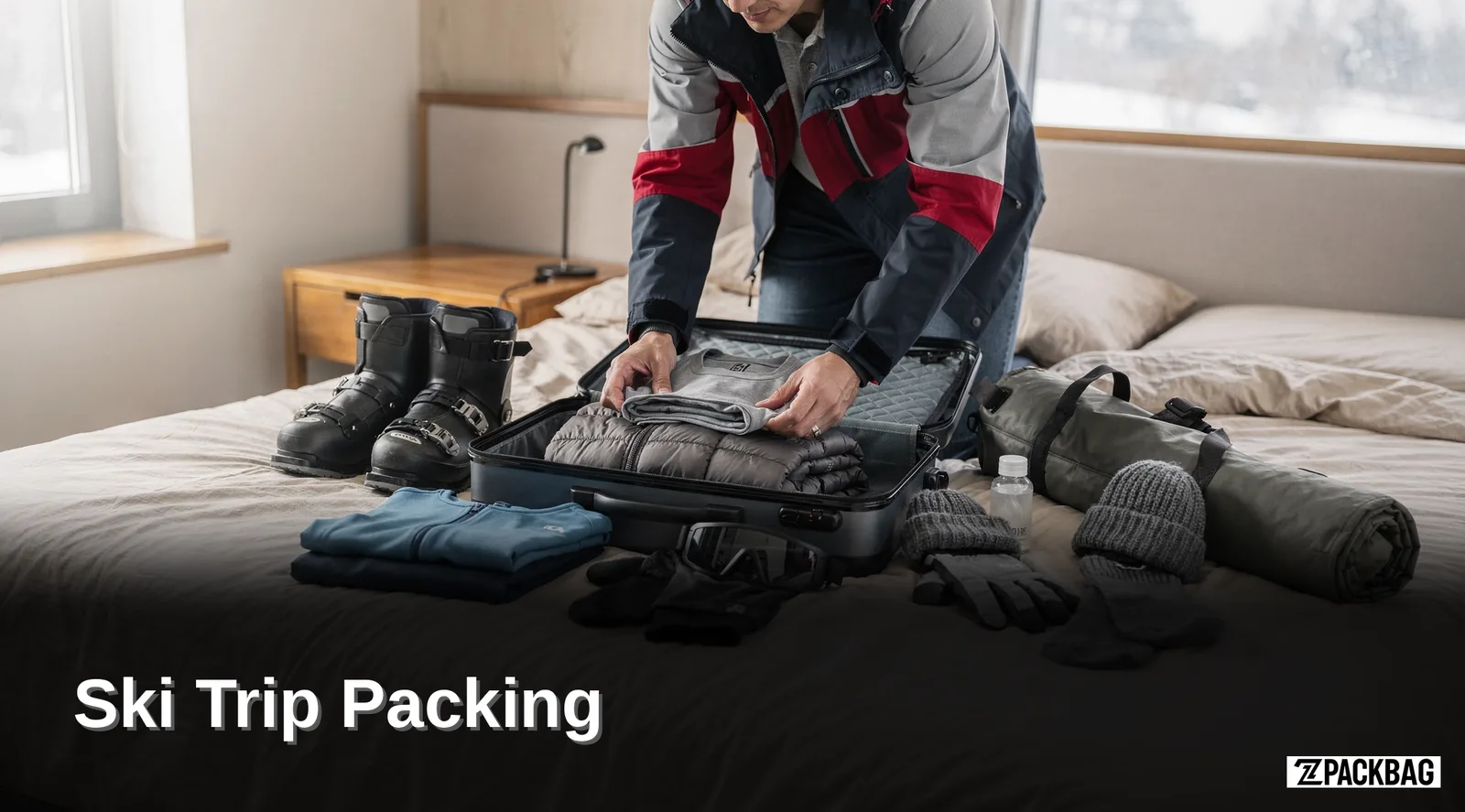
Ski trips have a packing problem that no other type of travel quite matches. A down jacket alone takes up half a standard carry-on before a single base layer goes in. Add ski pants, fleece, thermal underwear, and the aprés-ski outfits, and the math stops working — unless the right compression system is involved.
The 2PackBag Travel Kit removes the air from packed winter clothing, shrinking jackets and sweaters to a fraction of their normal size. The result is a carry-on that holds a full week of ski-trip clothing — bulky layers included — without checking a bag. This guide covers how to make that work from the first packing session to the return trip home.
Key Takeaways
- Compression removes trapped air from winter clothing, reducing volume by up to 50 percent or more.
- Rolling garments before loading creates significantly more space than folding — especially for sweaters and base layers.
- Ski boots belong along the bag's edges, loaded last, to preserve the compressed profile of packed clothing.
- Cheap vacuum bags fail within a few trips; ripstop construction and reinforced seals handle the demands of ski travel.
- The 2PackBag rechargeable mini pump works without a wall outlet — essential for hotel rooms, lodges, and mid-trip repacking.
Why Ski Trip Packing Is Harder Than Most Travel
Winter ski clothing is designed to trap air — that's how insulation works. A quality down jacket keeps a skier warm at altitude precisely because it holds warm air close to the body. That same property makes it the enemy of efficient packing. A jacket that packs to the size of a football on the mountain takes up the volume of a small suitcase when casually folded into a bag.
Add the layering system that serious skiers use — base layer, mid layer, outer shell — and the volume problem multiplies. Then there are the off-slope clothes, the boots that don't compress, and the accessories that fill every remaining gap. The result is a packing challenge that routinely turns into a checked bag, baggage fees, and a 20-minute wait at the carousel after a long travel day.
The 2PackBag Travel Kit solves this by doing what cold weather clothing doesn't want to do on its own: removing the air that makes it bulky. When the air is gone, a down jacket compresses to roughly the size of a rolled t-shirt. That changes the entire packing calculation.
What to Sort Before Packing Anything
Ski trip packing works best when clothing is sorted into categories before a single item goes into a bag. Mixing categories creates confusion, wastes space, and produces the kind of mid-trip "I can't find my base layer" situation that no one wants at 7 a.m. before a lift opens.
Sort into four categories first
- Bulky insulators — down jackets, fleece pullovers, heavy sweaters, ski pants. These go into compression first because they benefit most from air removal.
- Base layers and mid layers — thermal underwear, lightweight fleece, long-sleeve merino. These compress easily and fill gaps around the bulkier items.
- Off-slope clothing — casual outfits for the lodge, dinner, or travel days. Plan fewer pieces here — the mountain clothing takes up most of the space budget.
- Footwear and accessories — ski boots (or confirm rental at the resort), snow boots, gloves, hats, goggles. These don't compress and need to be planned around, not packed into, the compression system.
Confirm what the resort provides
Many ski resorts offer equipment rental — skis, poles, helmets, and sometimes boots. Renting boots at the resort eliminates the single heaviest, least compressible item from the packing equation entirely. If boots are being packed, they need to be planned for from the start rather than added after the bag is already organized.
How to Compress Ski Clothing Step by Step
The compression sequence for ski trip packing follows a specific order. Skipping steps wastes space; following them produces a bag that boards as a carry-on with room to spare.
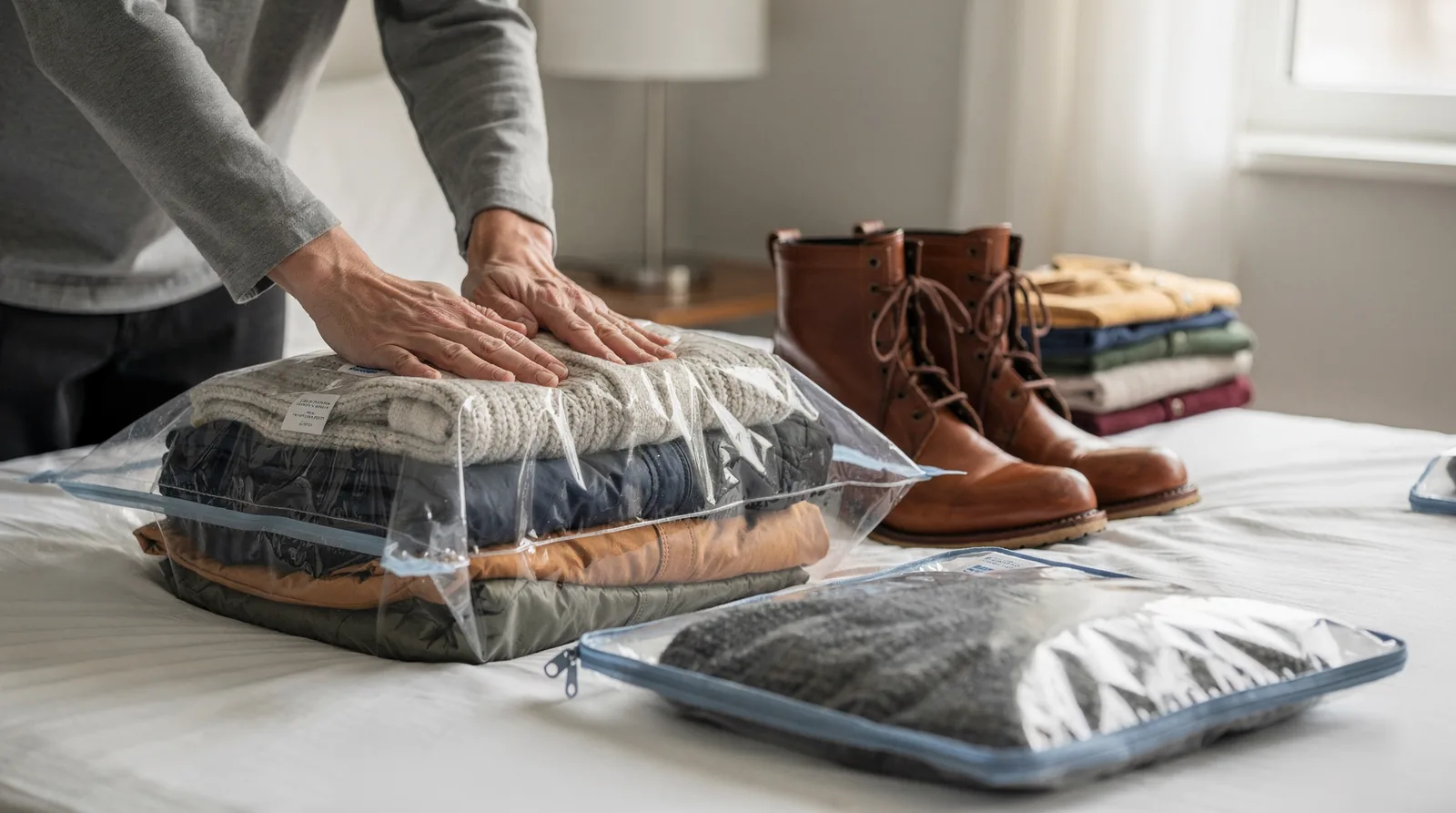
- Roll every garment tightly rather than folding it. Rolling removes more air than folding before compression even starts. Sweaters, base layers, and fleece respond especially well to tight rolling — the volume reduction before the pump is used is already significant.
- Load the largest, bulkiest rolls first. The down jacket, ski pants, and heaviest fleece go into the 2PackBag compression sleeve at the bottom. This creates a stable, flat base that the rest of the load builds on.
- Stack mid layers and base layers on top. These lighter, more flexible items fill the remaining space and conform to whatever shape the bottom layer creates.
- Seal the anti-leak zipper and connect the pump. The 2PackBag mini air pump is rechargeable and battery-powered — it works in the hotel room, the ski lodge, or anywhere else mid-trip repacking needs to happen. One full compression takes about 10 seconds.
- Load ski boots along the edges of the bag, outside the compression sleeve. Boots don't compress, but they fit cleanly along the sides of a rolling carry-on or duffel when the clothing inside has been compressed flat. The modular design of the 2PackBag system adapts to any bag type.
How much does compression actually help with winter clothing?
A down jacket that fills a quarter of a standard carry-on compresses to roughly the size of a rolled t-shirt. A full set of ski layers — jacket, pants, two mid layers, base layer — compresses to fit in less space than the jacket alone occupied uncompressed. The 2PackBag Travel Kit fits 15 or more outfits into a single carry-on, which covers a full week of ski trip clothing with room for the off-slope wardrobe as well.
The Complete Ski Trip Packing List
On-slope clothing (compressed)
- Ski jacket or shell (1) — compress first, largest item in the sleeve
- Ski pants or bibs (1)
- Mid layer fleece or insulated jacket (1–2)
- Base layer tops (2–3, merino wool recommended for odor resistance)
- Base layer bottoms (2)
- Ski socks (3–4 pairs — wool or synthetic, not cotton)
- Gloves or mittens (1 pair, plus liners)
- Hat or balaclava (1–2)
- Goggles (pack in a hard case, store in personal item)
- Neck gaiter or buff (1)
Off-slope clothing (compressed)
- Casual tops (2–3)
- One nicer option for dinner at the lodge
- Comfortable pants or jeans (1–2)
- Warm socks for evenings (2–3 pairs)
- Light layer for the lodge
Footwear
- Ski boots (pack along bag edges, or rent at resort)
- Snow boots or waterproof walking shoes for off-slope use
- Camp slippers for the lodge or hotel room
Accessories and essentials
- 2PackBag rechargeable mini pump — charged before departure
- Sunscreen (high SPF — UV exposure is significantly higher at altitude)
- Lip balm with SPF
- Hand warmers
- Any prescription medications
- TSA-compliant toiletries
- Phone charger and portable battery
What Goes Wrong With Budget Compression Gear on Ski Trips
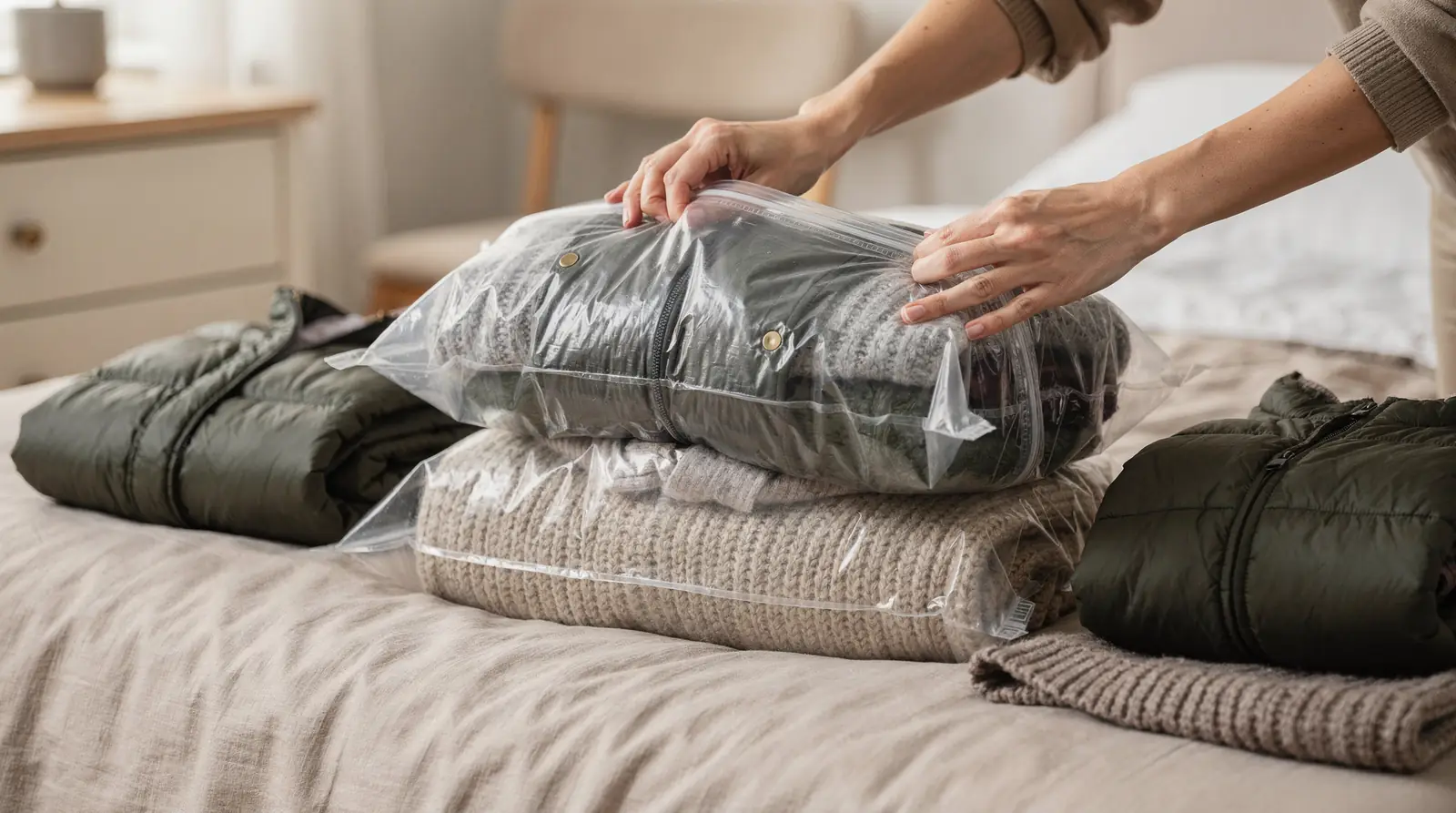
Ski trips are exactly the wrong context to find out that the cheap vacuum bag bought for the occasion doesn't hold its seal anymore. Budget compression bags typically fail within two or three trips as the plastic material cracks under the repeated stress of compression and decompression. The seal that worked perfectly on the first pack slowly stops holding, and by the third trip it's not compressing at all.
For a week on a mountain, mid-trip gear failure means repacking without compression — which means the clothing that fit perfectly on departure doesn't fit on the way home. The 2PackBag Travel Kit is built specifically to prevent this. Ripstop fabric resists the tears that thin nylon develops under repeated stress. Reinforced, anti-leak zippers hold their seal across hundreds of compression cycles. The system is designed for the kind of frequent, heavy use that ski travel demands.
Why packing cubes don't work for ski trip clothing
Packing cubes are useful for organization. They are not compression tools. A down jacket organized into a packing cube occupies exactly the same volume it did on the hanger — it's just tidier. For ski trip packing where bulky winter clothing needs to be physically reduced in size, organization alone never closes the bag. Only compression does that, and only a system with actual air removal creates meaningful volume reduction.
Repacking Mid-Trip and on the Way Home
Ski trips create a specific mid-trip repacking challenge: wet gear. A jacket that came in soaking after a heavy snow day needs to dry before it goes back into a compression sleeve. The 2PackBag mini pump handles the repack when the jacket is dry — which is typically the evening before the last day, or the morning of departure after a night of drying.
The return trip also tends to include items that weren't on the outbound: resort merchandise, gifts, items purchased at the destination. Compression creates room for these in the same bag that was perfectly full on departure. The math works because compressed clothing takes up less space than it did going in — whatever was added at the resort fits into the space compression freed up. Read how other skiers have handled this on the 2PackBag reviews page.
FAQ
How do compression bags help with ski trip packing?
Compression bags remove the trapped air that makes winter clothing bulky, allowing down jackets, fleece layers, and ski pants to collapse to a fraction of their normal size. The 2PackBag Travel Kit fits 15 or more outfits — bulky winter layers included — into a single carry-on, eliminating checked bag fees.
What is the correct order for packing ski clothing?
Roll every garment tightly first. Load the largest, bulkiest items — jacket, ski pants — at the bottom of the compression sleeve. Stack lighter layers on top. Seal and compress with the pump. Load boots along the bag's edges last, outside the compression sleeve.
Should I rent ski boots at the resort?
If the option is available and the trip is casual rather than competitive, renting at the resort eliminates the heaviest, least compressible item from the packing equation. For frequent or serious skiers who prefer their own fit, packing personal boots along the bag's edges works well alongside compressed clothing.
Is the 2PackBag Pro better for ski trips?
The 2PackBag Pro adds capacity, which benefits skiers packing for longer trips, multiple climate zones, or anyone bringing both heavy ski gear and a full off-slope wardrobe. For a standard 5–7 day ski trip, the original 2PackBag Travel Kit handles the volume comfortably.
Conclusion
Ski trips don't have to begin and end at the baggage claim. With the right compression system, a full week of ski clothing — jackets, layers, base layers, and off-slope outfits — fits into a carry-on that boards overhead and comes off the plane the moment it lands.
The 2PackBag Travel Kit is built for exactly this kind of heavy-duty packing challenge. Ripstop fabric, reinforced seals, and a rechargeable pump that works anywhere combine into a system that handles ski trip volume without the checked bag fees, the wait at the carousel, or the risk of arriving at the mountain without your gear. Over 121,500 travelers have made the switch — their reviews are worth reading before the next trip.