

Holiday Travel Packing Tips: Avoid Baggage Fees
By 2PackBag Editorial Team · Updated 2026-08-14
Vacation peak season packing success depends on maximizing carry-on capacity to skip checked bags entirely. Airline fees for a single checked bag now commonly exceed $50 per flight during winter travel spikes, and that number climbs fast once connections, return flights, and multiple family members enter the equation. Holiday weeks compound the problem: flights run fuller, gate agents enforce size and weight limits more strictly, and last-minute upgrades to a checked bag often cost more than booking one in advance. This holiday carry-on guide shows how compression packing tools like 2PackBag's Travel Bag fit 15+ outfits into a single carry-on, letting family travelers pack two weeks of clothing without paying extra baggage costs. The result is a lighter bag, a faster trip through security and boarding, and a wardrobe that still covers every outfit change a holiday itinerary demands.
Key Takeaways
- Rising fuel costs and airline baggage fees make mastering carry-on packing essential for budget-conscious travelers.
- United and other major airlines increased checked-baggage fees, citing escalating fuel costs from geopolitical factors.
- Overpacking directly triggers higher ancillary fees, making strategic packing a core budget travel principle.
- Advance planning reduces packing anxiety and prevents last-minute decisions that lead to excess luggage.
Why Do Vacation Baggage Fees Add Up So Fast?
Airline pricing during peak season punishes anyone checking a bag. Major U.S. carriers, including JetBlue, United, and American, charge upward of $50 for a first checked bag on domestic routes, and Delta, Alaska, and Southwest sit close behind. Multiply that fee across a family of four, add a connecting flight home, and the math turns painful fast. A second bag, if anyone in the group packs one, typically doubles or triples the surcharge, since airlines price each additional bag higher than the first.
Only two airlines currently let passengers check a bag for free. Nearly every other vacation traveler pays on each leg of the trip, coming and going. Skip the strategy behind smart vacation travel packing tips. A single round-trip can quietly cost $100 or more just for checked baggage fees. Book a connecting itinerary or a last-minute holiday fare, and airlines often push that fee even higher at the gate, since counter and gate rates run well above the price of prepaying online. Book a connecting itinerary or a last-minute holiday fare, and airlines often push that fee even higher at the gate, since counter and gate rates run well above the price of prepaying online.
Why Do Fees Feel Worse During the Holidays?
Winter travel means bulkier clothing, gifts, and gear competing for space in one suitcase. That combination pushes travelers past the free carry-on limit and straight into checked-bag territory. A single sweater or fleece jacket alone can eat the space of two or three warm-weather outfits, and stacking coats, boots, and gift-wrapped presents on top of a normal wardrobe leaves almost no room to spare.
Consider the difference peak season packing avoid fees strategies make:
- Standard suitcase packing: bulky sweaters, coats, and gifts often force a second checked bag.
- Compression-based packing: clothing volume shrinks, keeping everything inside one carry-on.
A disciplined vacation carry-on guide approach, built around compression, lets travelers pack two weeks of clothing into a single carry-on. Fees drop to zero, and there is no need to budget extra time at the airport for a bag drop or to gamble on whether a gate agent enforces a strict size check.
How Do You Pack a Vacation Carry-On Like a Pro?
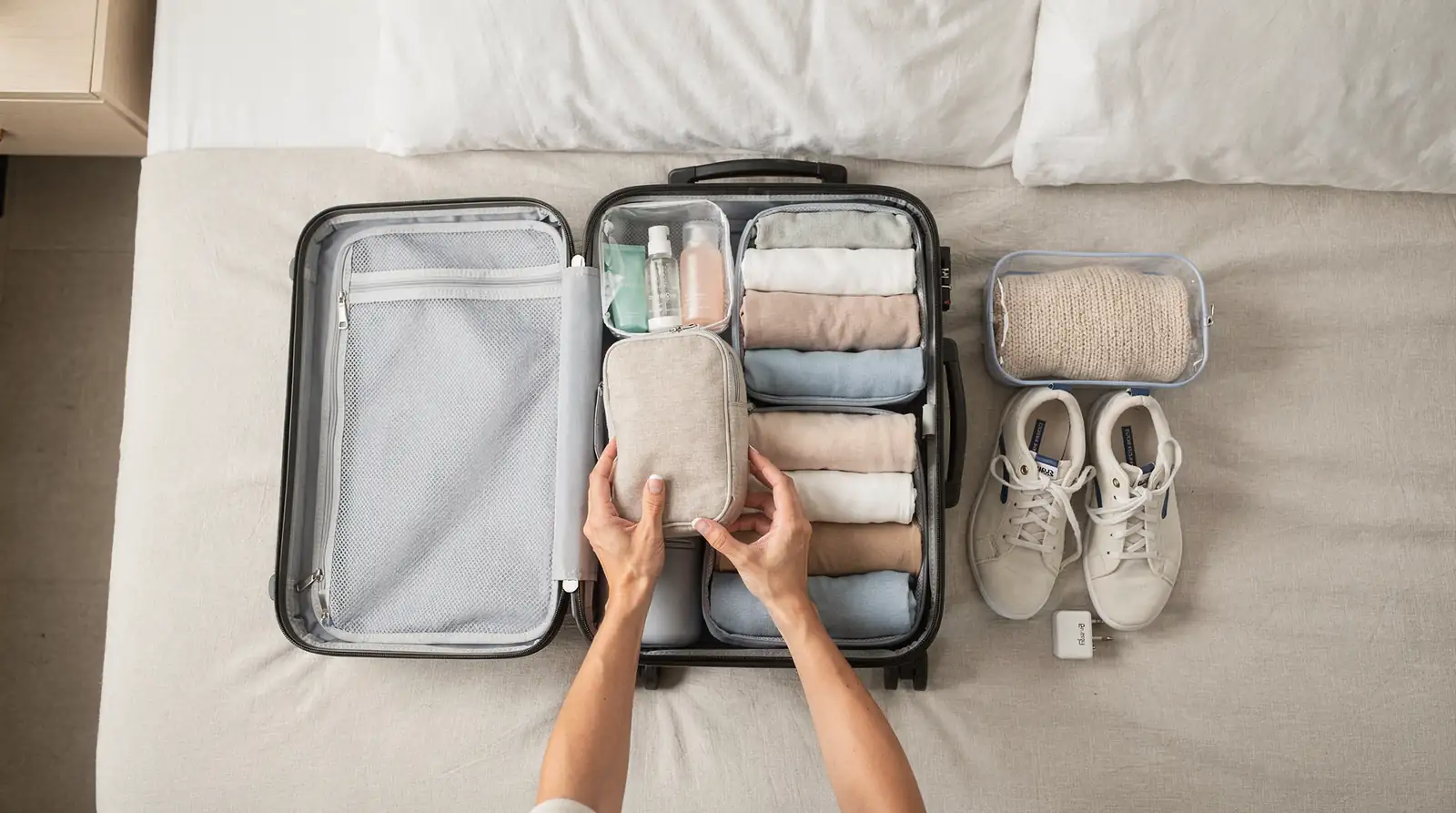
Pro packers rely on compression, not willpower, to fit a family's worth of clothing into one bag. Airtight compression technology fits 15 or more outfits into a single carry-on, letting travelers skip the check-in line entirely during the busiest weeks of the year. That single shift changes how families approach vacation travel packing tips for good.
The mechanics matter more than the mindset. A modular compression design doubles usable packing space and squeezes 15-plus clothing items into any bag, suitcase, or weekender already owned. No new luggage purchase required — just smarter use of the space already available.
How does compression packing actually work in practice?
A rechargeable mini pump handles the heavy lifting, pressing air out of each packing cube until clothing sits apartment and tight. One charge powers roughly 15 trips, which covers an entire vacation season of visits to relatives, ski trips, and New Year's getaways without a recharge.
What happens once travelers reach their destination?
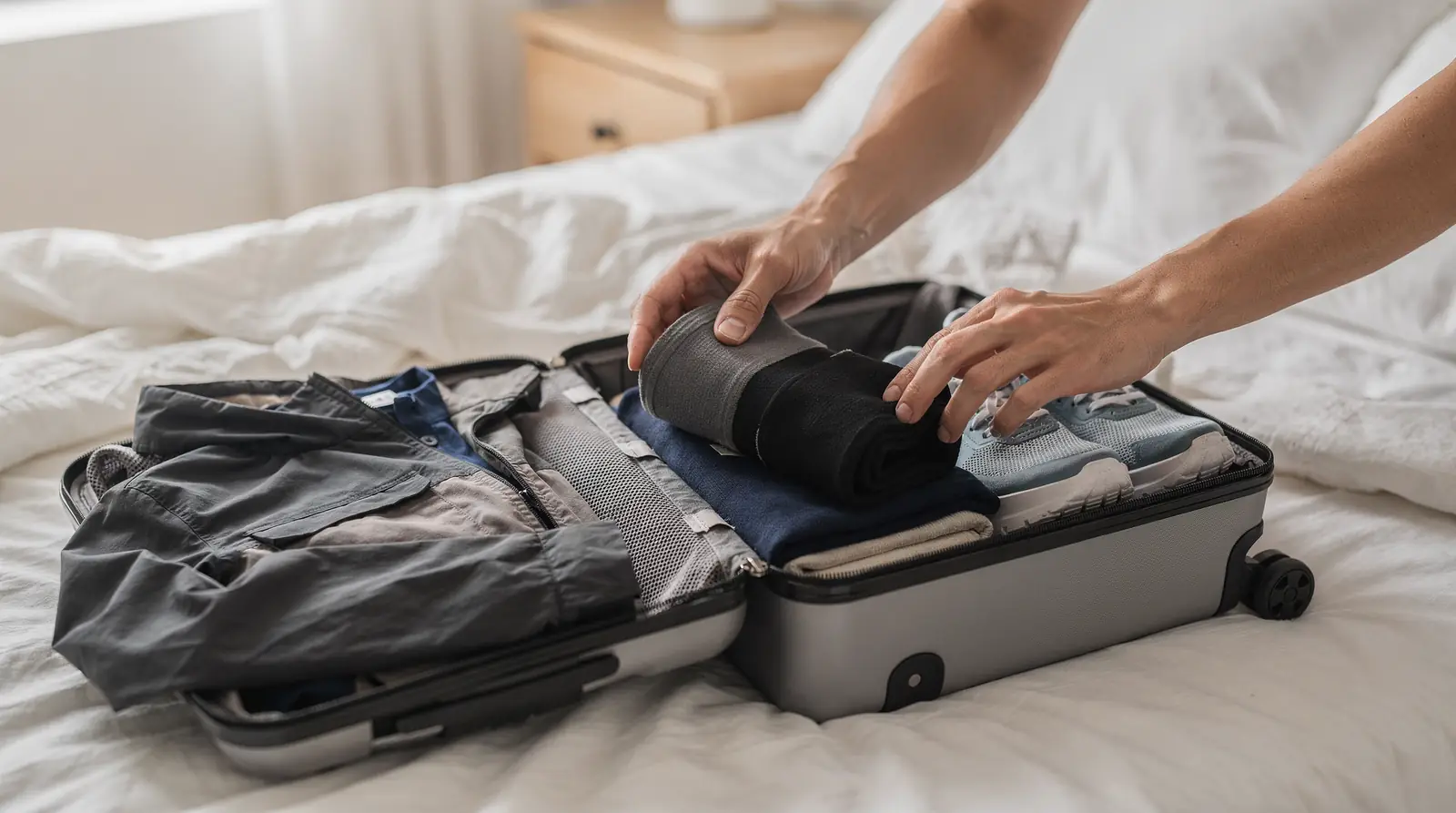
Repacking takes 10 seconds with the included USB pump. Compressed clothes come right back out for wear and get re-compressed just as fast for the return flight. This forms a complete vacation carry-on guide in miniature:
- Load clothing into compression cubes.
- Pump out the air until apartment.
- Fit everything into one carry-on.
- Skip checked-bag lines at the counter.
For peak season packing avoid fees strategy, travelers who still check a bag should prepay online before arriving at the airport. Most carriers knock $5 to $10 off the fee for early payment.
What Makes Compression Gear Worth Packing This Season?
Durability separates real compression gear from flimsy imitations. Budget vacuum bags split open after two or three uses, leaving families with cracked plastic and scattered clothes mid-trip, often right when a connecting flight leaves no time to repack from scratch. Premium ripstop nylon construction holds up through repeated vacation travel, season after season, without the material giving out, even when a bag gets tossed, stacked, or crammed into an overhead bin dozens of times a year.
Zipper quality matters just as much as fabric strength. Airtight, anti-leak zippers keep compressed clothing sealed tight, even through rough baggage handling and multiple flight connections during the busiest weeks of the year. Weak zippers are usually the first point of failure on cheap bags, letting air back in and undoing the compression before a trip even starts. That construction quality explains why over 121,500 travelers already trust this compression system for their own trips.
Is compression gear actually reliable for frequent vacation trips?
Reliability comes down to materials, not marketing claims. Ripstop nylon and reinforced zippers withstand the wear. Tear that cheaper bags cannot survive past a couple of uses. For families flying multiple times during peak season, that durability translates directly into fewer replacement purchases.
What if the bag doesn't work as expected?
Risk stays low thanks to a 100-day hassle-free return window. Travelers can test the compression system on an actual trip before committing. Below, a quick comparison shows the difference:
| Feature | Cheap Vacuum Bags | Premium Compression Gear |
|---|---|---|
| Lifespan | Fails after 2-3 trips | Built for repeated seasonal use |
| Zippers | Prone to leaks | Airtight, anti-leak seal |
| Risk | Often final sale | 100-day return window |
Frequently Asked Questions
How much does it cost to check a bag during the holidays?
Most major U.S. airlines charge $50 or more for a first checked bag on domestic flights, and that fee often climbs further during peak holiday weeks or when paid at the airport instead of online in advance. A round trip for one traveler can easily run $100 or more once both directions are counted.
Which airlines still let you check a bag for free?
Only two U.S. airlines currently include a free checked bag with a standard fare. Every other major carrier, including JetBlue, United, American, Delta, Alaska, and Southwest, charges a fee on both the outbound and return legs of a trip.
Can compression packing cubes really replace a checked bag?
Yes. Airtight compression squeezes the air out of clothing, letting 15 or more outfits fit into a single carry-on. That's typically enough for a full two-week holiday trip without needing to check a bag at all.
How long does it take to compress and repack clothes with a travel pump?
A rechargeable mini pump compresses a packing cube in seconds, and a full carry-on repack takes about 10 seconds with the included USB pump. One charge covers roughly 15 trips before it needs to be plugged in again.
Are compression travel bags durable enough for repeated holiday travel?
Quality matters here. Budget vacuum bags tend to split or leak after two or three uses, while ripstop nylon construction with airtight, anti-leak zippers is built to withstand repeated seasonal travel and rough baggage handling without failing.