

Carry-On Approved Sizing and Capacity Guide: How to Choose and Maximize Your Carry-On Bag Dimensions

Navigating the world of carry-on luggage can be an intricate task, especially with the varying size limits imposed by airlines. This comprehensive guide will equip you with the necessary insights into choosing the right carry-on bag size and maximizing its capacity. By understanding the nuances of airlines' carry-on dimensions, measurement techniques, and packing strategies, you can avoid common pitfalls and ensure a hassle-free travel experience. You will learn about the standard airline carry-on size limits, how to measure your bag accurately, the benefits and regulations surrounding compression packing bags, and more. This guide aims to address your pressing questions, from understanding weight restrictions to exploring practical tips for selecting the best carry-on luggage for your travels.
What Are the Standard Airline Carry-On Size Limits?
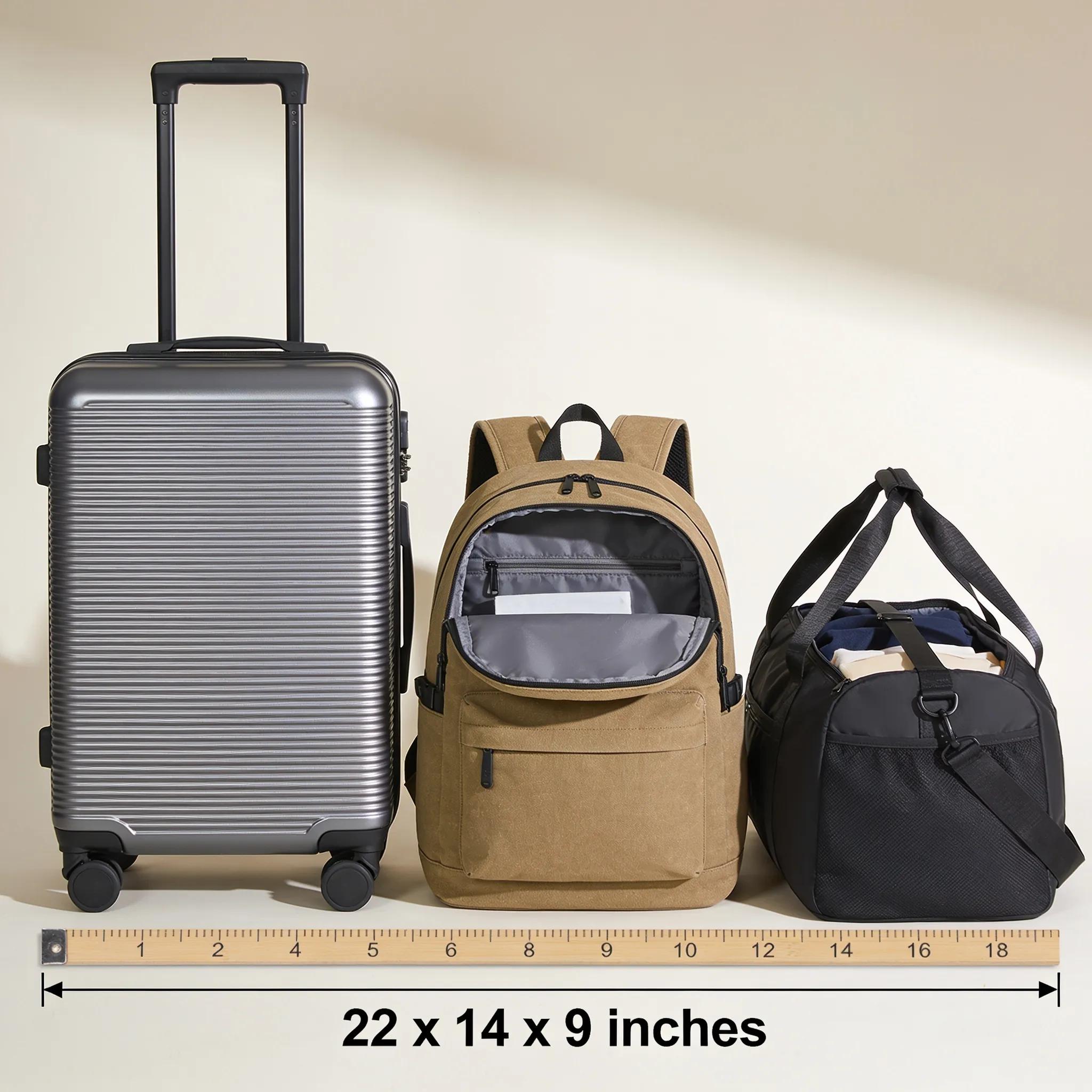
Major airlines have specific size limits for carry-on luggage to optimize space for all passengers. As of 2023, the most commonly accepted size standard is 22 x 14 x 9 inches (56 x 36 x 23 cm), including wheels and handles. These dimensions are critical for ensuring that your bag fits in the overhead compartment or under the seat in front of you, minimizing the risk of having to check your luggage unexpectedly.
| Airline | Allowed Dimensions | Capacity |
|---|---|---|
| American Airlines | 22 x 14 x 9 inches | 40 L |
| Delta Air Lines | 22 x 14 x 9 inches | 45 L |
| United Airlines | 22 x 14 x 9 inches | 48 L |
Understanding these limitations helps travelers plan accordingly and choose bags that comply with airline policies, ultimately leading to a smoother boarding process.
Which Airlines Define the Most Common Carry-On Dimensions?
Several major airlines adhere to the standard carry-on dimensions of 22 x 14 x 9 inches. Airlines such as American Airlines, Delta, and United lead with these dimensions. However, regional variations may exist. For instance, some low-cost airlines may impose stricter size guidelines to minimize overhead space usage and maximize baggage fees from non-compliant travelers.
How to Interpret Height, Width, and Depth Restrictions for Carry-On Bags?
To effectively interpret height, width, and depth restrictions, it's essential to recognize the measurement approach used by airlines. Typically, airlines measure carry-on bags by including wheels and handles in the overall dimensions. It's vital to measure your bag accurately to encompass all aspects, ensuring there are no misunderstandings. Many travelers mistakenly assume that only the main body of the bag counts, leading to potential issues at the gate.
How Can You Measure Your Carry-On Bag Correctly to Meet Approved Dimensions?
Measuring your carry-on bag accurately is key to preventing last-minute surprises at the airport. Utilizing a tape measure is the most reliable method; however, comparing your bag against the carry-on limits set by specific airlines can further ensure compliance.
What Tools and Techniques Ensure Accurate Carry-On Bag Measurement?
For optimal measurement accuracy, utilize a flexible tape measure to gauge the exact height, width, and depth of your carry-on bag. Ensure to position your bag as it would be used while traveling, standing upright with wheels on its bottom. If available, digital measurement tools can provide further precision. Using these approaches minimizes the likelihood of errors and ensures compliance with airline requirements.
How Do Airlines Verify Carry-On Bag Size at Check-In and Boarding?
At check-in and boarding, airlines typically employ a size-checking device that passengers must fit their carry-on bags into. If the bag does not fit, you may be required to check it or pay additional fees for oversized luggage. This step serves to enforce size restrictions and maintain order in limited cabin space, making it crucial to measure your bag beforehand.
Can Compression Packing Bags Increase Your Carry-On Luggage Capacity?

Compression packing bags are a smart solution for maximizing luggage capacity. They work by reducing the volume of clothing or items inside them through a vacuum seal or compression, allowing travelers to fit more in their carry-on bags.
How Do Compression Bags Work to Reduce Volume and Save Space?
Compression bags function by eliminating air, reducing the size of clothing or bulkier items by about 50%. This allows travelers to pack efficiently even in smaller carry-on bags and enables adherence to carry-on size restrictions. Users can strategically pack bulkier items in compression bags to free up space for lightweight essentials.
Are Compression Bags Allowed in Carry-On Luggage by Airlines?
Most airlines permit the use of compression bags in carry-on luggage, but it's important to verify individual airline policies, as some may have specific guidelines regarding their use. Generally, as long as the total dimensions of the packed bag comply with airline carry-on regulations, and the bag fits in the required size-check devices, compression bags can be an effective packing resource.
What Are the Different Types of Carry-On Bags and Their Recommended Sizes?
Understanding the various types of carry-on bags can help travelers choose the best option for their needs. The common types include backpacks, suitcases, and duffel bags. Each type comes with different dimensions and advantages based on the traveler's style and requirements.
How Do Backpack, Suitcase, and Duffel Carry-On Bags Compare in Size and Function?
- Backpacks tend to be versatile and easy to carry, making them ideal for adventurers and business travelers. Standard backpack dimensions generally range from 18 x 12 x 8 inches to accommodate airline specifications efficiently.
- Suitcases are designed for organized packing, providing compartments for various items. They commonly fit within the 22 x 14 x 9 inches limit.
- Duffel bags offer flexibility and tend to be lightweight but may vary widely in size. The best duffel bags fit within the carry-on dimensions while providing ample packing options.
Which Carry-On Bag Size Offers the Best Balance Between Capacity and Airline Compliance?
Selecting a carry-on bag that maximizes both capacity and compliance requires careful consideration of the allowable dimensions. Bags that measure close to the standard maximum (22 x 14 x 9 inches) will provide optimal space while remaining airline-friendly, ensuring convenience through traveling.
How to Stay Within Carry-On Luggage Weight Limits and Avoid Fees?
Staying within weight limits is crucial, as most airlines impose strict restrictions on the weight of carry-on bags. Understanding these limits and developing strategic packing skills will help travelers avoid excess baggage fees while ensuring they have everything needed for their journey.
What Are Common Weight Restrictions Imposed by Airlines on Carry-On Bags?
Common weight restrictions imposed by airlines for carry-on bags typically range from 15 to 22 pounds (7 to 10 kg). Notably, some airlines may not have specific weight limits but require bags to fit within certain dimensions to avoid potential fees at check-in.
What Packing Strategies Help Travelers Comply with Weight and Size Rules?
To comply with both weight and size rules, travelers can employ several effective strategies:
- Choose lightweight bags: Select lightweight materials and designs for your carry-on.
- Pack efficiently: Roll clothing and use packing cubes to minimize space and weight.
- Leave non-essentials at home: Assess clothing and items for necessity to avoid overpacking, particularly for short trips.
What Are Practical Tips and FAQs to Optimize Your Carry-On Approved Sizing and Capacity?
Traveling efficiently within carry-on constraints requires knowledge and preparation. By following practical tips and addressing frequently asked questions, travelers can enhance their experience while ensuring compliance with travel regulations.
What Common Questions Do Travelers Have About Carry-On Size and Capacity?
Many travelers are often confused about what constitutes an acceptable carry-on size. Questions like “Does my bag's size include wheels?” or “What about personal items?” frequently arise. It's vital to clarify that the entire bag, including wheels, should be included in the measurements, and most airlines allow one personal item of smaller dimensions (often around 18 x 14 x 8 inches) alongside the primary carry-on.
What Do Verified Customers Say About Their Carry-On Bag Experiences?
Traveler reviews often emphasize the importance of measuring carry-on bags correctly and selecting appropriate sizes based on airline standards. Many users highlight the benefits of compression bags and using lightweight designs to increase packing efficiency. Overall, satisfied customers report fewer travel hassles and improved experiences when adequately prepared.